


Someone looks at you and asks, "Hey, are you okay?" And right there — your throat tightens, your mind goes completely blank, and somehow the only words that come out are... "I'm fine."
If this sounds familiar, you're not alone. In today's episode, we explore what's really happening when the words won't come out, and how to gently move past it while learning some key English vocabulary.
The Freeze is Protection, Not Weakness
When you can't speak your mind, it's easy to assume something is wrong with you — that you're bad at feelings or just too sensitive. However, it's actually your nervous system trying to protect you.
Just as it reacts to physical danger, your brain watches out for emotional risks like rejection or embarrassment. When it senses danger, it triggers the instinct to freeze up.
to freeze up /tuː friːz ʌp/ (phrasal verb): To suddenly become unable to move, speak, or think clearly, usually because of fear, shock, or strong emotion. Example: He froze up in the interview and forgot every answer he had prepared.
You might experience a lump in your throat — a tight, heavy feeling right before you might cry. This physical reaction is simply an old alarm system trying to keep you safe from past hurts.
Practicing Low-Stakes Honesty
The common advice to "just say how you feel" is often useless because you can't argue with an alarm system. Instead, you have to retrain it by practicing in low-stakes situations.
low-stakes /ˌloʊ ˈsteɪks/ (adj): Involving very little risk or importance, so a mistake wouldn't cause serious harm. Example: Ordering the wrong meal at a café is a low-stakes mistake.
Start by expressing small, honest preferences to safe people. Tell a friend you're too tired to go out. You can even rehearse saying true things out loud when you're alone in your car. Hearing your own voice speak your truth helps your body learn that honesty is survivable.
The Slow Loosening of the Freeze
With practice, the freeze doesn't magically disappear overnight. Instead, it begins to loosen up (gradually become less tense). The pause before you speak gets a little shorter, creating a tiny gap where you can slip in an honest sentence.
That small moment is a true breakthrough (a sudden important success). It might not look dramatic, but simply saying one honest thing a little easier than last time is a huge victory.
Ready to improve your English and your communication skills? Start for free with our interactive lessons. For more tips on daily life and speaking, explore our other episodes on the Blog.



 IELTS Speaking: 1,500 Words in 40 Mock Tests
 Home with Leo — everyday life (A1–A2)
 Nobel Economist: Where He Sees the Real Money in AI
 Vocabulary Builders
 Grammar Made Simple
 Learn Through Stories
 Idioms & Phrasal Verbs
 Writing Practice
 Home with Leo · Day 1: Cooking Dinner Together
 Home with Leo · Day 2: After Dinner
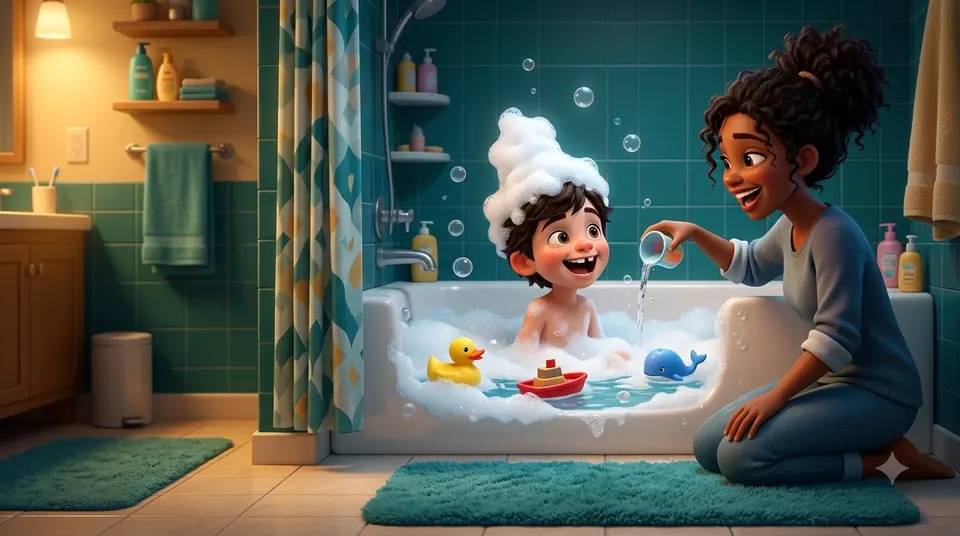 Home with Leo · Day 3: Bath Time
 Home with Leo · Day 4: Good Night, Leo
 Home with Leo · Day 5: Friday Morning
 Home with Leo · Day 6: Oops! Friday Breakfast
 Home with Leo · Day 7: Brave Leo
 Home with Leo · Day 8: One-Handed Monday
 Home with Leo · Day 9: Back to School Monday
 Home with Leo · Day 10: The Mail Carrier
 5,000 Words · Sphere 1: Daily Routine & Social Ties (Eps 1–10)
 Home with Leo · Day 11: The Package
 Home with Leo · Day 12: The Living Room
 Home with Leo · Day 13: TV Time
 Home with Leo · Day 14: The Balcony
 Home with Leo · Day 15: Cleaning Saturday: From the Top Down
 Home with Leo · Day 16: Cleaning Saturday: Kitchen, Bathroom and Floors
 Home with Leo · Day 17: Laundry Saturday
 Home with Leo · Day 18: Clean Sheets Sunday
 Home with Leo · Day 19: Dad Works from Home
 Home with Leo · Day 20: Safe at Home